
Copy trading is a trading method that allows investors to automatically copy another trader’s positions into their own account. When the selected trader opens or closes a position, the copying platform attempts to repeat that action based on the follower’s settings.
For beginners asking what is copy trading, the main attraction is convenience. You can follow another trader’s decisions without placing every order yourself. However, copied trades can lose money, and automation does not remove market risk.
Unlike manually following forex trading signals, copy trading can execute trades automatically. Understanding this difference is important before choosing a platform.
What Is Copy Trading and How Does It Work?
Copy trading connects two participants: a signal provider and a follower.
The signal provider places trades through a supported trading account. The follower selects that trader and allows the copying system to replicate eligible positions.
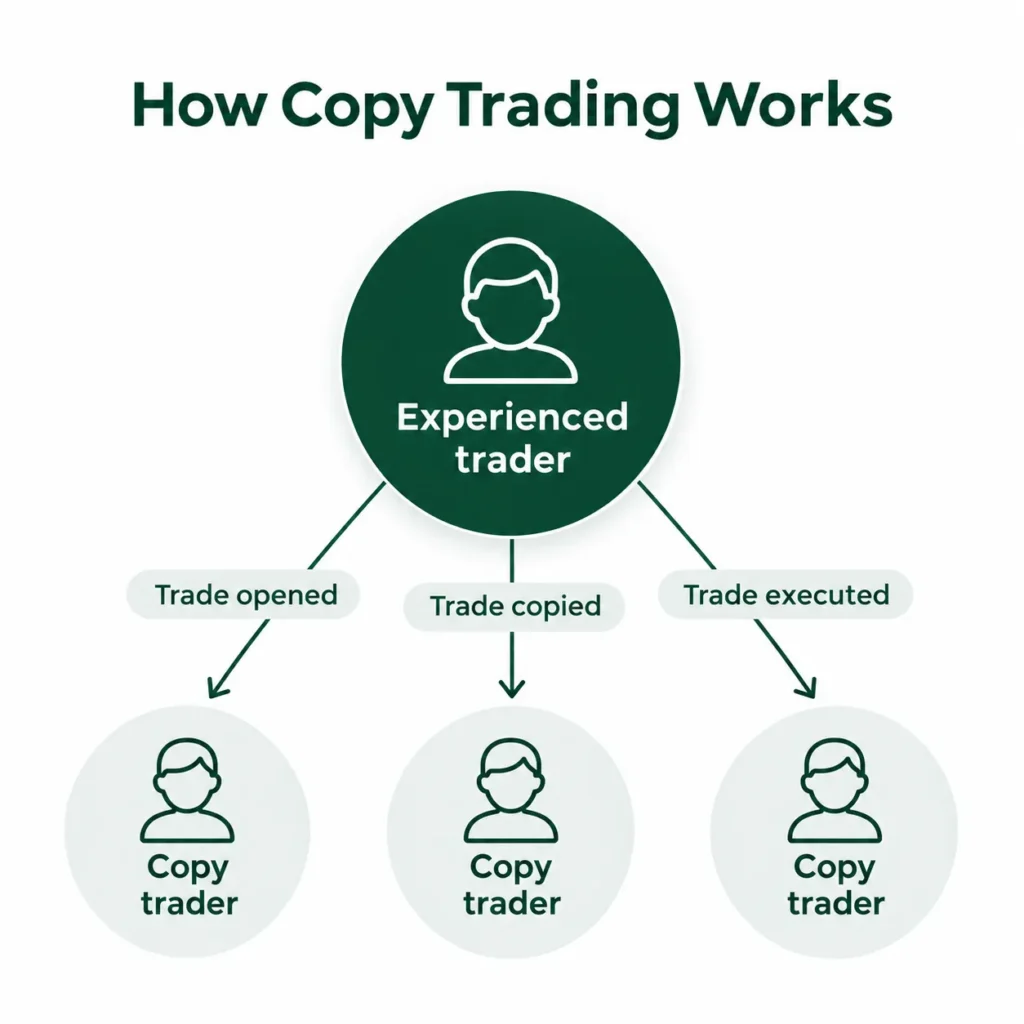
How Does Copy Trading Work Step by Step?
- Choose a platform: Select a broker or service that supports copy trading.
- Find a trader: Review available signal providers and their trading records.
- Set your allocation: Decide how much capital to assign to copying.
- Adjust risk settings: Set available limits for position size and losses.
- Start copying: The platform attempts to replicate the provider’s trades.
- Monitor performance: Check open positions, costs, and changing market conditions.
For example, when a signal provider opens a EUR/USD buy trade, the follower’s account may open a corresponding position automatically.
The actual trade size depends on the platform’s copying method and account settings. Execution prices may also differ.
Best Copy Trading Platforms to Consider
The best platform depends on your trading experience, preferred markets, broker availability, and risk controls.
1. eToro CopyTrader
eToro offers a social investing platform where eligible users can browse investor profiles and copy selected traders.
Its interface may appeal to beginners who prefer viewing trading activity and investor information in one place.
2. MetaTrader Signals
MetaTrader provides a signals marketplace for supported MT4 and MT5 accounts.
Traders can subscribe to signal providers and copy transactions through compatible broker accounts.
Understanding the differences between MT4 and MT5 can help when selecting compatible trading software.
3. cTrader Copy
cTrader Copy allows eligible users to follow strategy providers through supported brokers.
It provides strategy information and copying features, although available settings depend on the provider and broker.
4. ZuluTrade
ZuluTrade connects eligible followers with trading strategies through participating brokers and supported account arrangements.
Users should review provider records, applicable fees, and available risk-management controls before copying.
Important: Platform availability, supported markets, costs, and regulatory protections differ by country. These examples are not performance rankings or endorsements.
Key Components of a Copy Trading Platform
A copy trading platform normally includes:
- Signal providers: Traders whose positions are available to copy.
- Followers: Users who allocate funds to replicate those trades.
- Copying engine: Software that transmits and processes trade instructions.
- Risk controls: Settings for allocation, position sizing, and stopping copying.
- Performance information: Trading history and risk data used to assess providers.
Data flow and execution speed in copy trading are particularly important.
Network delays, broker execution, liquidity, and slippage can cause followers to receive different entry or exit prices from the original trader.
The IG explanation of copy trading also distinguishes copying another trader’s positions from making independent trading decisions.
Advantages and Disadvantages of Copy Trading
Benefits of Copy Trading
Convenience: Automatic execution reduces the need to enter every trade manually.
Access to different strategies: Followers can observe how other traders approach markets.
Flexible participation: Some platforms allow users to adjust their allocations or stop copying.
Learning opportunities: Reviewing copied trades may help beginners recognise different trading methods.
Risks and Challenges of Copy Trading
Financial losses: Following an experienced trader does not guarantee profitable results.
Leverage risk: Leveraged positions can magnify losses.
Provider dependence: A copied trader may change strategies or take unexpected risks.
Execution differences: Delays, spreads, and slippage can affect follower results.
Hidden costs: Subscription charges, commissions, spreads, and performance fees may reduce returns.
The same forex risk management strategies used in manual trading remain important when copying positions.
How to Choose a Copy Trading Strategy
A suitable copy trading strategy should match your risk tolerance and trading objectives.
Before selecting a provider, consider these factors:
- Trading history: Review results across different market conditions rather than focusing on recent gains.
- Drawdown: Examine how much the account has declined during losing periods.
- Trading approach: Check whether the provider uses scalping, swing trading, or another method.
- Position sizing: Avoid providers whose trade sizes appear unsuitable for your account.
- Transparency: Look for clear information about costs, risk, and open positions.
Followers can also compare providers using forex signal provider selection criteria, including transparency and trading discipline.
A strategy that performed well previously may still produce substantial losses.
Copy Trading vs Manual Trading vs Trading Bots
These methods differ in how trading decisions are made.
Copy trading: Another trader makes the initial decision, and the follower’s account replicates eligible positions.
Manual trading: The account holder researches markets and places trades independently.
Trading bots: Software generates and executes trades according to programmed rules.
Automated trading strategies for copy trading may combine these methods when a provider uses trading algorithms.
A TradingView trade copier, for example, may use alerts and third-party software to send orders to another account. However, this is not necessarily the same as following a trader through a social copy trading platform.
Similarly, AI copy trading tools may assist with analysis or automation, but claims of artificial intelligence do not prove that a system is reliable.
Is Copy Trading Legal?
Copy trading can be legal, but the rules depend on the country, financial instrument, and service structure.
In the United Kingdom, the Financial Conduct Authority’s guidance on copy trading explains that certain automatic copying arrangements may qualify as portfolio management and require appropriate authorisation.
Before opening an account, verify the broker’s regulatory status, the contracting entity, and whether the service is available in your jurisdiction.
Conclusion
Understanding what is copy trading helps traders evaluate whether automated trade copying suits their experience and risk tolerance.
Platforms such as eToro, MetaTrader Signals, cTrader Copy, and ZuluTrade offer different approaches. The right choice depends on execution quality, transparency, costs, regulation, and available risk controls.
Copy trading should be treated as a trading activity that requires monitoring, not as guaranteed passive income.
Frequently Asked Questions
Copy trading can generate gains, but it can also cause significant losses. Results depend on the provider's decisions, market conditions, trading costs, and risk settings. Profits are never guaranteed.
Copy trading may help beginners observe trading decisions, but it is not a substitute for financial knowledge. Beginners should understand leverage, position sizing, and trading risks before committing funds.
Many platforms allow users to stop copying. However, stopping the copying relationship may not automatically close existing positions. Check the platform's specific rules.
No. Forex signals provide trading ideas that a user may execute manually. Copy trading can automatically replicate another trader's positions through a connected platform.
Actual market trades generally require a broker or another authorised execution provider. Copy trading software alone does not replace the infrastructure needed to execute trades.