Forex trading can be kinda exciting, but it also brings real risks. A lot of traders spend endless hours looking for the “perfect” strategy, some indicator tweak, or a forex trading signal that just works every time. Still, there is one thing that kinda separates the people who keep winning from the ones who seem to lose money again and again: risk management.
The truth is kinda simple, too. Even a really strong trading strategy can go wrong if risk isn’t properly kept under control. That’s why advanced traders pay a lot of attention to forex risk management, and they try to keep a solid reward-to-risk ratio going.
In this blog, you’ll get familiar with the best forex risk management habits, you’ll see how to improve your reward-to-risk ratio, and you’ll learn how to defend your trading capital while your long-term results actually get better.
What Is Forex Risk Management?
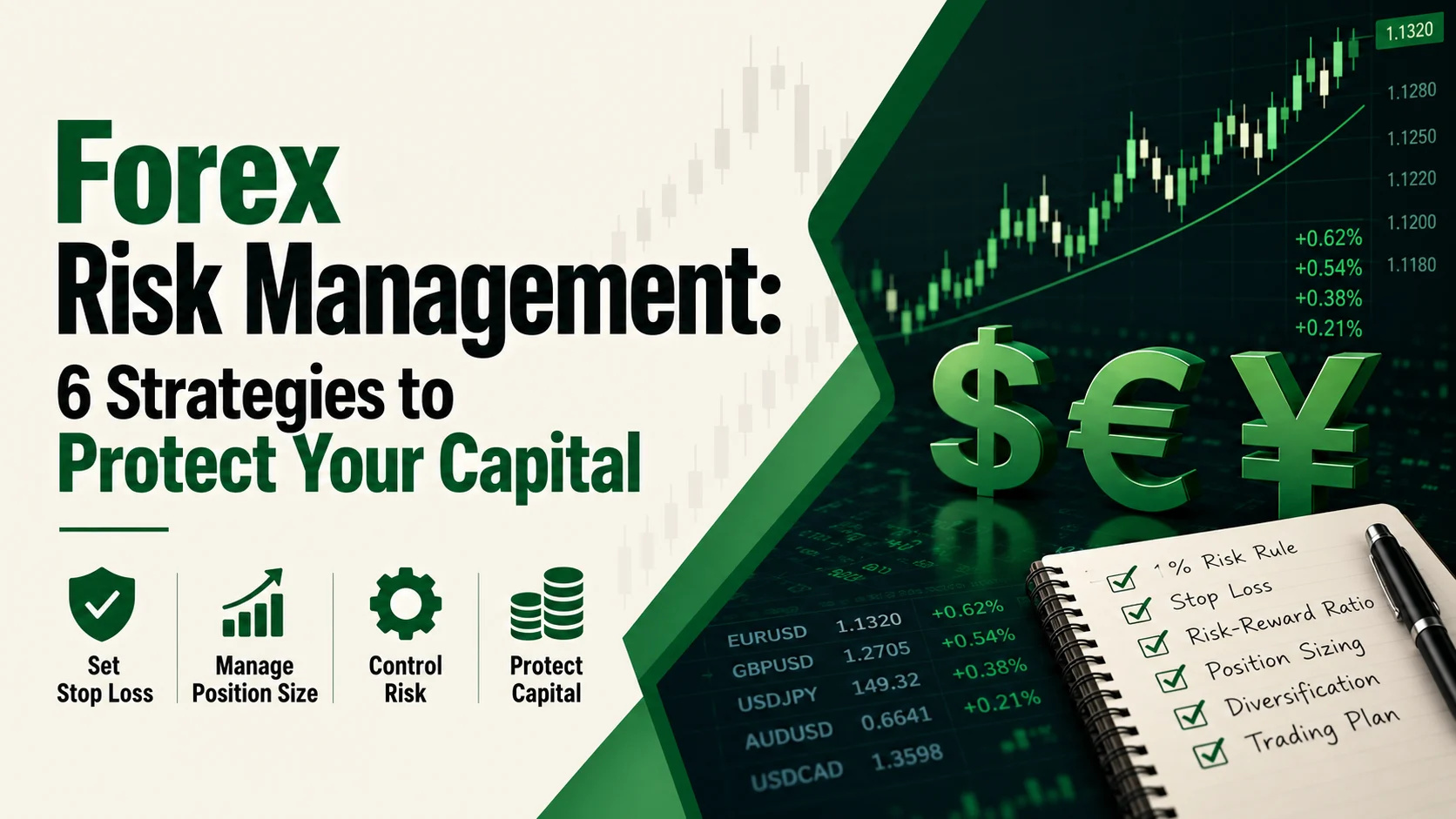
Forex risk management is basically the art of handling potential losses, while also trying to allow room for upside gains. It means creating clear rules that help a trader safeguard capital and keep going even during losing phases, not just during the easy weeks.
Each forex trade has uncertainty. Nobody can forecast the market with full precision 100% of the time. Risk management helps soften the effect of bad decisions, and it makes sure that one mistake, or one random sequence, doesn’t drain the entire account.
Solid risk management usually includes things like:
- Using stop loss orders
- Controlling position size and not over-stretching
- Capping how much you risk per trade
- Keeping a favorable reward-to-risk ratio
- Using leverage in a responsible, disciplined manner
Without proper forex risk management, even traders who are profitable for a while can eventually get pushed out and lose their accounts.
Why Risk Management Matters More Than Winning Trades
Many beginners think that profitable trading is basically about winning most trades. But actually, the real deal is that successful traders care much more about managing the losses, like not in a dramatic way but in a consistent, methodical sort of sense.
Let’s picture two different traders, kind of like:
- Trader A wins 80% of trades, yet risks $100 in order to make $50.
- Trader B wins only 45% of trades, but risks $100 to make $300.
After a while, Trader B tends to pull ahead because the payoff-to-risk setup is just way stronger, even if the win rate is lower. So the point is not to pretend losses won’t happen. The point is to keep those losses controlled, small-ish, and then allow the winning moves to build up.
That idea is basically the bedrock behind the best forex risk management strategies.
Understanding the Reward-to-Risk Ratio
The reward-to-risk ratio measures how much you might gain compared to how much money you are risking.
Formula:
Reward-to-Risk Ratio = Potential Profit ÷ Potential Loss
For example:
- Potential loss = $100
- Potential profit = $300
Reward-to-Risk Ratio = 3:1
So, that tells you you’re trying to earn three dollars for every one dollar you risk.
Common Reward-to-Risk Ratios
Ratio | Meaning |
1:1 | Risk $1 to make $1 |
1:2 | Risk $1 to make $2 |
1:3 | Risk $1 to make $3 |
1:4 | Risk $1 to make $4 |
Most professional traders prefer a minimum forex risk reward ratio of 1:2 or higher.
How to Calculate Reward-to-Risk Ratio
Learning how to figure out the reward-to-risk relationship in forex is kind of a must for every trader, if you ask me.
Let’s take a quick example, just to keep it simple and not overthink it.
Trade Setup
- Entry Price: 1.1000
- Stop Loss: 1.0950
- Take Profit: 1.1150
Risk Calculation
Risk = 50 pips
Reward Calculation
Reward = 150 pips
Ratio
150 ÷ 50 = 3
So, the reward-to-risk relationship becomes 1:3, meaning you’re basically aiming to gain about three times more than you’re willing to lose.
Before you even click enter, traders should still map out the risk-reward setup to see if the chance actually makes sense or not.
Best Forex Risk Management Strategies
1. Risk Only 1% to 2% Per Trade
One of the stronger money management ideas in forex is keeping the damage small per trade.
Example, like this:
- Account Balance: $10,000
- Risk Per Trade: 1%
- Maximum Risk = $100
That way, even if you get a few unlucky streaks, the account doesn’t get wrecked right away.
A lot of seasoned traders stay at, or under, 2% risk on a single deal.
2. Always Use a Stop-Loss Order
A stop-loss order closes the position automatically, once a specific loss level is met.
It helps by:
- limiting losses
- removing emotional calls
- safeguarding trading capital
- making results more repeatable
Trading without a stop-loss is, honestly, one of those classic forex mistakes people keep making.
3. Use Proper Position Sizing
Position sizing tells you how much of a currency pair to buy or sell.
A bigger size can bring bigger wins, but yes, it also expands the losses, fast.
Good position sizing makes sure your risk stays steadier, even when the market conditions shift around.
This is one of the key parts of a professional forex trading strategy.
4. Avoid Overleveraging
Leverage lets traders move larger positions using less capital.
Sure, it can boost gains, but it can also magnify losses, sometimes in a way that feels unfair.
So, don’t let leverage do the driving, even if it looks tempting at first. Smart traders use leverage carefully and focus on preserving capital.
5. Diversify Trading Opportunities
Try not to put all your exposure in one market, or even one currency pair.
Like, if you open multiple trades that involve the US dollar, you might end up getting hit by the same market event over and over, even if the pairs look different.
By spreading your placements, you lower concentration risk, and you end up with a steadier, more even approach to trading.
6. Keep a Trading Journal
A trading journal helps traders jot down things such as
- entry points
- exit points
- risk-to-reward ratios
- mistakes
- emotions
Going back and reviewing your trades regularly makes it easier to spot weaknesses and then sharpen decision-making, too.
A lot of traders who are consistently profitable see journaling as a real, essential part of their risk management plan.
The Relationship Between Win Rate and Reward-to-Risk Ratio
Many traders become obsessed with achieving a high win rate.
However, win rate alone does not determine profitability.
Consider this example:
Trader | Win Rate | Reward-to-Risk Ratio |
Trader A | 80% | 1:0.5 |
Trader B | 45% | 1:3 |
Although Trader A wins more trades, Trader B may generate higher profits because each winning trade earns significantly more than each loss.
This concept is known as trading expectancy.
The best forex risk management approach combines a reasonable win rate with a strong reward-to-risk ratio.
Common Reward-to-Risk Ratio Mistakes
Here are some common reward-to-risk ratio mistakes traders make.
Moving stop-losses further away
A lot of traders widen those stop losses after they have already entered the trade, and it feels safer, but it isn’t always. It tends to increase the risk, and you end up with bigger losses more often than you would like.
Taking profits too early
Sometimes fear shows up, and traders close winning positions before the target is reached. That kind of cuts the total reward, and it can drag down the reward-to-risk ratio, even if the trade was “right” at the start.
Chasing unrealistic targets
If you set profit targets that are too distant, the chances of actually hitting them drop. The trick is to keep targets sensible, while still getting favorable risk-reward chances, not just wishful numbers.
Ignoring market conditions
A 1:3 ratio can look great on paper, but only if the market environment actually supports the idea. Always look at volatility, the current direction of price, plus support and resistance zones, because those details matter.
Risking too much per trade
Overexposure is one of the quickest ways to mess up a trading account. When you stick to tight risk management rules, you reduce the odds of emotional decisions, and you trade more consistently.
How Professional Traders Optimize Reward-to-Risk Ratios
Professional traders do not just pick profit targets randomly. They kind of use a kind of structured analysis to make trade quality better, or at least that’s what it feels like in practice.
Technical Analysis
A lot of the time, the tools are something like:
- Support and resistance levels
- Trendlines
- Moving averages
- Price action patterns
They basically help you see clear entry and exit points that make more sense, not just guesses.
Waiting for High-Probability Setups
There’s also patience, and it matters more than people think.
Instead of forcing new trades every day, professionals wait for setups that give a better reward-to-risk situation. It’s less about urgency, more about timing.
Using Market Volatility
Many traders rely on the Average True Range, or ATR, to read how volatile the market really is.
That input then helps decide on stop-loss levels and take-profit levels that don’t feel out of place.
Scaling Out of Positions
Some traders lock in part of the profit, while the rest of the position stays open to keep moving.
This gives a balance: profit protection first, and still room for growth potential.
Building Your Personal Forex Risk Management Plan
Every trader should have a written risk management plan.
Example Plan
Rule | Example |
Risk Per Trade | 1% |
Daily Loss Limit | 3% |
Weekly Loss Limit | 6% |
Minimum Reward-to-Risk Ratio | 1:2 |
Maximum Open Trades | 3 |
A personalized plan creates discipline and helps remove emotional decision-making.
Key questions to ask yourself include:
- How much am I willing to lose per trade?
- What is my daily loss limit?
- What reward-to-risk ratio will I accept?
- How many trades can I manage effectively?
Creating clear rules is one of the best forex risk management practices available.
Conclusion
Successful forex trading isn’t about chasing a perfect strategy, not even close. It’s mostly about protecting capital and managing risk in a clean way.
A strong forex risk management approach is usually about limiting losses, keeping correct position sizes, using stop-loss orders, and getting the reward-to-risk ratio optimized.
Also, remember this: profitable traders follow one key principle, capital preservation first. If you risk only a small percentage of your account, and you target favorable reward-to-risk ratios, you’re giving yourself the chance to remain in the market long enough to pursue consistent growth.
Learning risk management might not sound as exciting as chasing big profits, but it’s actually the base layer, the real foundation behind every successful trading path.
Mastering risk management is the key to long-term trading success. Join Elite XAUUSD Signals for expert gold trading insights, high-probability setups, and disciplined strategies designed to help traders protect capital and maximize opportunities.
Disclaimer
Forex trading involves substantial risk and may not be suitable for all investors. Free forex signals should not be considered financial advice. Always conduct your own research, use proper risk management, and consult a licensed financial advisor before making trading decisions.
FAQs
Most pro traders try for something like 1:2 at minimum. In practice, that means potential profit should be at least 2 times the potential loss, so the long-term results get better and you do not drown when things go wrong.
A lot of experts say 1% to 2% of your trading account per single trade. That small amount keeps your capital safer even if you hit a losing streak. Sometimes it’s boring, but it works.
Yes, absolutely. If your reward-to-risk ratio is strong, say 1:3, you can still be profitable with a win rate under 50%. It’s kind of counterintuitive at first, but the math holds.
A stop-loss keeps losses in check, protects your trading capital, and also reduces emotional decisions when the market is moving too fast or has extra volatility. Without it, you start guessing more than trading.
Overleveraging, plus risking too much on one trade, are probably the most common blunders. Those two things together can lead to heavy losses, quickly and without much mercy.